
FAQs About Weather-Resistant Coatings for Barndominiums

Weather-resistant coatings are essential for shielding barndominiums in Canada from extreme conditions like freezing winters, UV exposure, and coastal salt air. These coatings prevent water damage, cracking, and corrosion, ensuring your structure lasts longer and requires less maintenance. Here’s a quick breakdown:
- Types of Coatings: Factory-applied options like PVDF and SMP offer durability, while field-applied coatings provide flexibility for repairs and custom colours.
- Canadian Climate Challenges: Freeze-thaw cycles, road salt, and UV exposure demand specific coatings tailored to your region.
- Costs: Professional coatings typically range from $1.50 to $6.00 per sq. ft., with preparation being a key factor in pricing.
- Lifespan: High-quality coatings can last 15–40 years, depending on the type and maintenance routine.
Proper surface preparation and timely application are crucial for long-term performance. Whether you’re protecting metal, wood, or concrete, choosing the right coating for your climate and material is key.
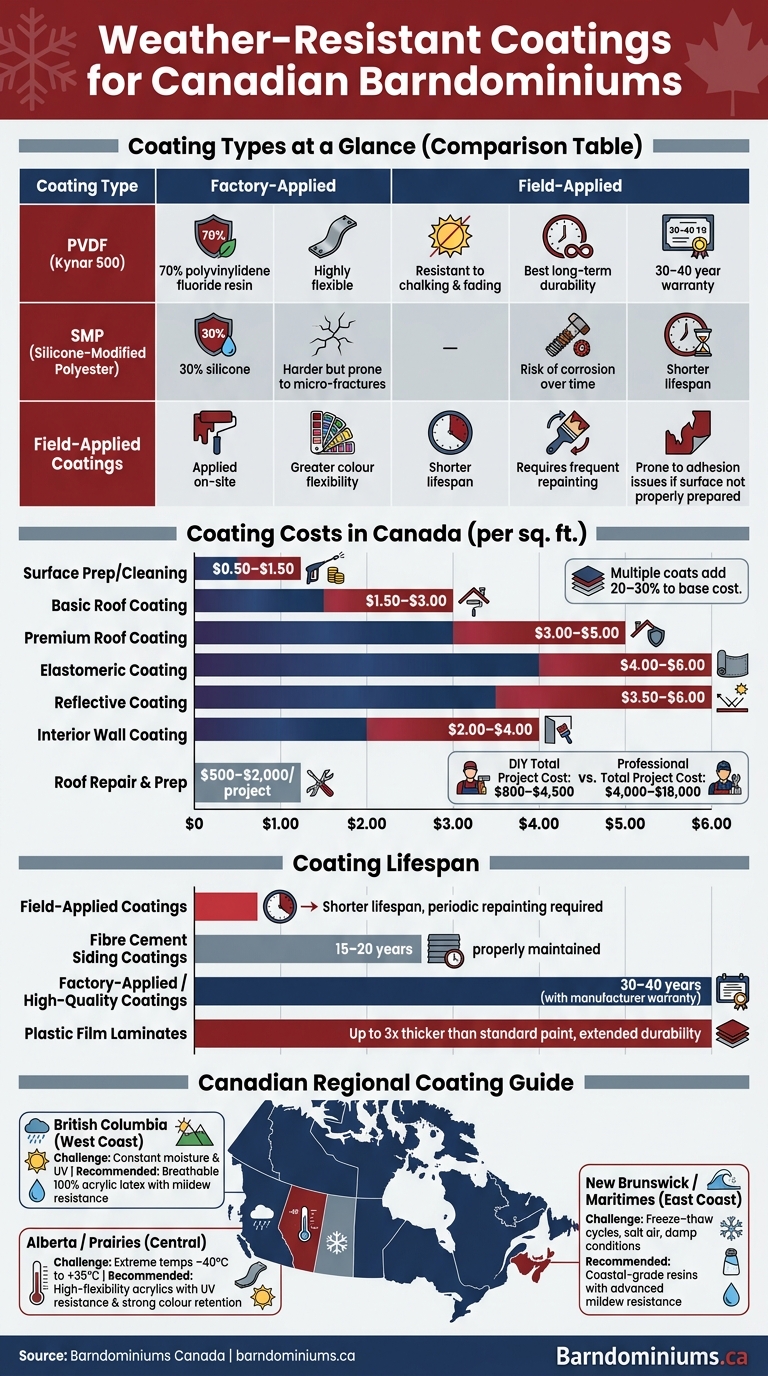
Weather-Resistant Coatings for Canadian Barndominiums: Costs, Lifespan & Regional Guide
Common Types of Weather-Resistant Coatings
Choosing the right coating depends on factors like the surface material, application method, and the specific environmental conditions of the area.
Factory-Applied Coatings for Metal Surfaces
Factory-applied coatings are often the go-to choice for metal surfaces. Since they’re applied in a controlled environment, these coatings deliver a consistently superior finish.
"Factory-applied painting results in a much higher quality finish and greater life expectancy." – Canadian Roofing Contractors Association
The two most widely used factory-applied systems are PVDF (Kynar 500) and SMP (Silicone-Modified Polyester). PVDF coatings, with 70% polyvinylidene fluoride resin, are highly flexible and resistant to chalking and fading. On the other hand, SMP contains only 30% silicone, which makes it harder but more prone to micro-fractures during panel forming. These fractures can expose the base metal, increasing the risk of corrosion over time.
For durability and long-term performance, PVDF is often the better choice. High-quality metal panels with factory-applied coatings typically come with 30- to 40-year warranties from manufacturers. Another option is laminate coatings, which are applied as a plastic film instead of liquid paint. These coatings can be up to three times thicker than standard paint systems and are designed to resist chipping, peeling, and chalking.
While factory coatings ensure consistent quality, field-applied options offer more flexibility in terms of colour and application.
Field-Applied Coatings for Metal, Concrete, and Wood
Field-applied coatings are applied on-site during construction or maintenance. Though they allow for greater colour flexibility, they come with certain limitations.
"The life expectancy of field-applied paints is relatively short and periodic repainting may be required." – Canadian Roofing Contractors Association
For metal surfaces, acrylic and alkyd paints dominate as common choices. When it comes to concrete, clear penetrating sealers are often used to block moisture without altering the appearance of the surface. For wood elements such as trim, posts, or decorative features, exterior-grade stains or paints work best. These coatings allow the wood to breathe while providing water resistance.
However, field-applied coatings are more prone to adhesion issues if the surface isn’t properly prepared. Any contamination, rust, or moisture left on the surface before application can significantly reduce the coating’s lifespan.
Coatings for Canadian Climate Conditions
In Canada, where the climate can vary dramatically, selecting the right coating is especially important. Freeze-thaw cycles, heavy snow, road salt, and strong UV exposure can all accelerate the deterioration of exterior finishes.
| Environment | Recommended Coating | Materials to Avoid |
|---|---|---|
| Heavy snow / freeze-thaw | Rubber or polyurethane (PU) bases, galvanized hardware | Brittle PVC, thin ABS |
| High UV / summer heat | UV-stabilised PE, powder-coated metals | Unstabilised PVC, low-cost paints |
| Road salt / coastal exposure | Hot-dip galvanized, 304/316 stainless steel | Plain carbon steel, zinc-only screws |
In areas where temperatures regularly drop below −20°C, standard PVC can become brittle and crack. Materials like UV-stabilised polyethylene (PE) and low-temperature polyurethane (PU) are far more resilient in such conditions. For regions near the coast or where road salt is heavily used, hot-dip galvanized steel or 304/316 stainless steel are the best options for corrosion resistance.
"The weather wins if you pick the wrong material + coating + hardware. Choose for the worst month at your site, not the nicest day." – Biri Group
sbb-itb-d6e8a6a
Surface Preparation and Application Methods
How to Prepare Metal, Concrete, and Wood Surfaces
Thorough cleaning is key to ensuring coatings adhere properly to the surface being treated.
| Surface Type | Primary Preparation Steps | Recommended Reinforcement |
|---|---|---|
| Metal | Pressure wash, remove rust, apply primer | Fabric on seams and penetrations |
| Concrete | Levelling mortars, leak injection, priming | Seal cracks with liquid-applied resins |
| Wood | Sanding/cleaning, ensuring dry substrate | Seamless elastomeric membranes |
For metal surfaces, pressure washing clears oxidation and contaminants, while a primer boosts adhesion and helps prevent corrosion. Reinforcing seams and penetrations with 4″ to 12″ fabric before applying the main coating ensures durability. On concrete, levelling mortars smooth out irregularities and block moisture, while injection resins are effective for sealing active leaks. Wood surfaces, such as trim or posts, must be clean, dry, and suitable for outdoor use. Elastomeric membranes provide a flexible, seamless barrier that resists cracking under stress.
To seal seams, cracks, or splits, a three-coat system is recommended: apply a coating, add reinforcement fabric, and finish with another layer of coating.
Application Techniques and Tools
Once the surface is prepped, the right tools make all the difference in achieving a smooth, durable finish. For large areas, airless sprayers are ideal, combined with back-rolling using a short-nap roller to maintain even thickness. Smaller or irregular surfaces are best handled with brushes, especially for detailing around penetrations and tight corners.
"Back-rolling helps to maintain a uniform coating thickness and minimize runs and sags." – Maribeth Taylor, Chase Corp
A wet film gauge is useful for detecting thin spots in the coating. For metal applications, Direct to Metal (DTM) coatings are highly effective, as they flex with temperature changes without losing adhesion.
Weather conditions and timing play a critical role in ensuring successful application.
Weather and Timing for Coating Application
Weather conditions heavily influence how well a coating cures. Ideal ambient temperatures range between 15°C and 30°C, while the substrate temperature should stay at least 3°C above the dew point to avoid moisture condensation, which can weaken adhesion.
"At the dew point, no more water vapor can be held by the air, meaning local moisture conditions are maximally high… if the substrate temperature is too close to the dew point, moisture will condense on the substrate’s surface and impede the quality of adhesion." – Tyler Gleckler, Chemist, ArmorThane
High relative humidity (above 80–85%) can lead to blistering or bubbling in the coating. For most Canadian regions, late spring through early fall provides the best conditions for application. This period allows coatings to cure properly before facing freeze–thaw cycles in winter. It’s also important to monitor overnight temperatures, as a warm day followed by a cold night can compromise a freshly applied coating before it sets completely.
Costs, Lifespan, and Maintenance of Coatings
Typical Coating Costs in Canada
The cost of coatings in Canada varies depending on factors like the surface type, the condition of the substrate, and how accessible the area is for application. However, the size of the surface area remains the biggest cost driver – larger barndominiums, for instance, need more material and take longer to coat.
Before applying a coating, you should budget $0.50 to $1.50 per sq. ft. for professional surface cleaning to ensure proper adhesion. Skipping this essential preparation step is one of the main reasons coatings fail prematurely. This highlights why surface prep, as discussed earlier, is so vital.
While barndominium construction costs vary, here’s a cost breakdown for some common coating projects:
| Coating/Service Type | Average Price Range (per sq. ft.) |
|---|---|
| Basic Roof Coating | $1.50 – $3.00 |
| Premium Roof Coating | $3.00 – $5.00 |
| Elastomeric Coating | $4.00 – $6.00 |
| Reflective Coating | $3.50 – $6.00 |
| Interior Wall Coating | $2.00 – $4.00 |
| Roof Repair and Prep | $500 – $2,000 per project |
If multiple coats are required, expect the base costs to increase by 20–30%. Opting for spray application instead of brushing or rolling can help reduce labour costs, so it’s worth considering when comparing quotes.
How Long Coatings Last Under Canadian Weather
The lifespan of a coating plays a big role in its overall value, especially when factoring in Canada’s challenging climate. Factory-applied coatings tend to outlast field-applied ones, requiring less frequent maintenance. However, even field-applied coatings can perform well if chosen and applied correctly.
In regions like Alberta, where temperatures range from −40°C to +35°C, coatings face constant expansion and contraction. Elastomeric coatings are particularly well-suited to these conditions because of their flexibility.
"Asphalt is naturally flexible, meaning it expands and contracts with temperature changes. This prevents cracking and ensures long-term adhesion, even under extreme weather conditions." – Prokoat
When properly maintained, high-quality coatings on fibre cement siding can last 15 to 20 years. Plastic film laminates, which are up to three times thicker than standard liquid paints, offer even greater durability, resisting chipping, fading, and chalking for extended periods.
Maintenance Tips to Extend Coating Life
To get the most out of your coating investment, regular maintenance is a must. Start by pressure washing the exterior every 2 to 3 years to remove dirt, pollen, and other contaminants that can degrade the coating over time. Keep the pressure between 1,500 and 2,000 PSI to avoid damaging the surface.
Reapply caulking around windows, doors, and roof penetrations every few years to prevent moisture from seeping in. Water infiltration in these areas is a leading cause of coating failure.
For metal surfaces, act quickly to address scratches and chips to prevent rust from spreading. Keep some matching touch-up coating on hand for immediate repairs. Also, ensure metal surfaces don’t have direct contact with the ground, as soil contact accelerates corrosion regardless of the coating quality.
After major storms, clear gutters and inspect the roof and siding for damage. This prevents small issues from worsening during freeze-thaw cycles.
Canadian-Specific Coating Considerations and Resources
Coating Recommendations by Canadian Region
Canada’s wide-ranging climates require coatings tailored to specific regional conditions. Here’s a breakdown of recommendations for different parts of the country:
| Region | Primary Challenge | Recommended Coating Feature |
|---|---|---|
| British Columbia | Constant moisture, UV exposure | Breathable acrylic latex with mildew resistance |
| Alberta / Prairies | Extreme temperature swings (–40°C to +35°C) | High-flexibility acrylics with strong colour retention |
| New Brunswick / Maritimes | Freeze–thaw cycles, damp conditions, salt air | Coastal-grade resins with advanced mildew resistance |
In British Columbia, the persistent moisture makes mildew and blistering common issues. A high-quality, 100% acrylic latex coating is ideal here. These coatings allow moisture vapour to escape, reducing the risk of damage from trapped water.
For Alberta and the Prairies, the challenge lies in handling extreme temperature fluctuations and intense sunlight. Coatings with high flexibility and UV resistance are essential to prevent cracking and fading over time.
In New Brunswick and the Maritimes, the damp conditions, salty air, and frequent freeze–thaw cycles demand coastal-grade coatings. These are specifically designed to resist mildew and endure harsh environmental conditions.
By choosing the right coating for your region, you can ensure better durability and protection for your project.
Planning and Budgeting for Your Coating Project
Once you’ve identified the appropriate coating, it’s time to focus on planning and budgeting. Proper budgeting ensures your project meets the demands of Canada’s challenging weather while staying within financial limits.
For professional projects, costs typically range between $4,000 and $18,000, depending on the scope. If you’re considering a DIY approach, expenses may fall between $800 and $4,500, allowing you to save up to 85% on labour costs. Don’t forget to account for additional materials like primer, caulking, and specialty coatings for high-moisture areas.
Need help estimating costs? Barndominiums Canada offers a free pricing service to connect you with verified Canadian providers. This tool can help you incorporate coating and finishing expenses into your overall project budget before making any commitments.
Conclusion
Weather-resistant coatings are a key element for protecting Canadian barndominiums from harsh weather conditions and avoiding expensive repairs.
It’s important to choose coatings that align with your building materials and local climate. For instance, metal panels often come with factory-applied coatings that include warranties lasting 30 to 40 years. However, regular upkeep is still essential to ensure long-term durability.
As highlighted:
"Steel won’t rot, warp, or attract pests, and when properly insulated, steel homes are highly energy-efficient in cold climates." – Barndo Canada
For help with budgeting or finding reliable contractors, check out Barndominiums Canada’s free pricing service. It connects you with trusted Canadian providers to simplify your planning process.