
How To Clean Metal Siding In Canada

I recommend mild soap, a soft brush and a garden hose to clean painted steel or aluminium siding. Follow your siding maker’s care instructions, and choose a calm day above 5°C with no overnight frost forecast.
My approach is simple:
- Inspect first: Check for loose panels, damaged seals, scratches and rust. Arrange repairs before washing.
- Wash gently: Test the cleaner on a hidden spot, then work in sections about 1–2 m across. Apply soap from the bottom up and rinse from the top down.
- Protect the finish: Use only approved stain cleaners. <u>Never mix cleaners</u> or spray upward under panel laps, trim or flashing.
- Plan for Canadian weather: Clean in spring and fall, and rinse road salt from lower walls between washes when temperatures stay above freezing and the siding can dry.
The goal is clean siding – not harder scrubbing. Once it dries, I recommend checking for bare metal, bubbling paint and water entry.
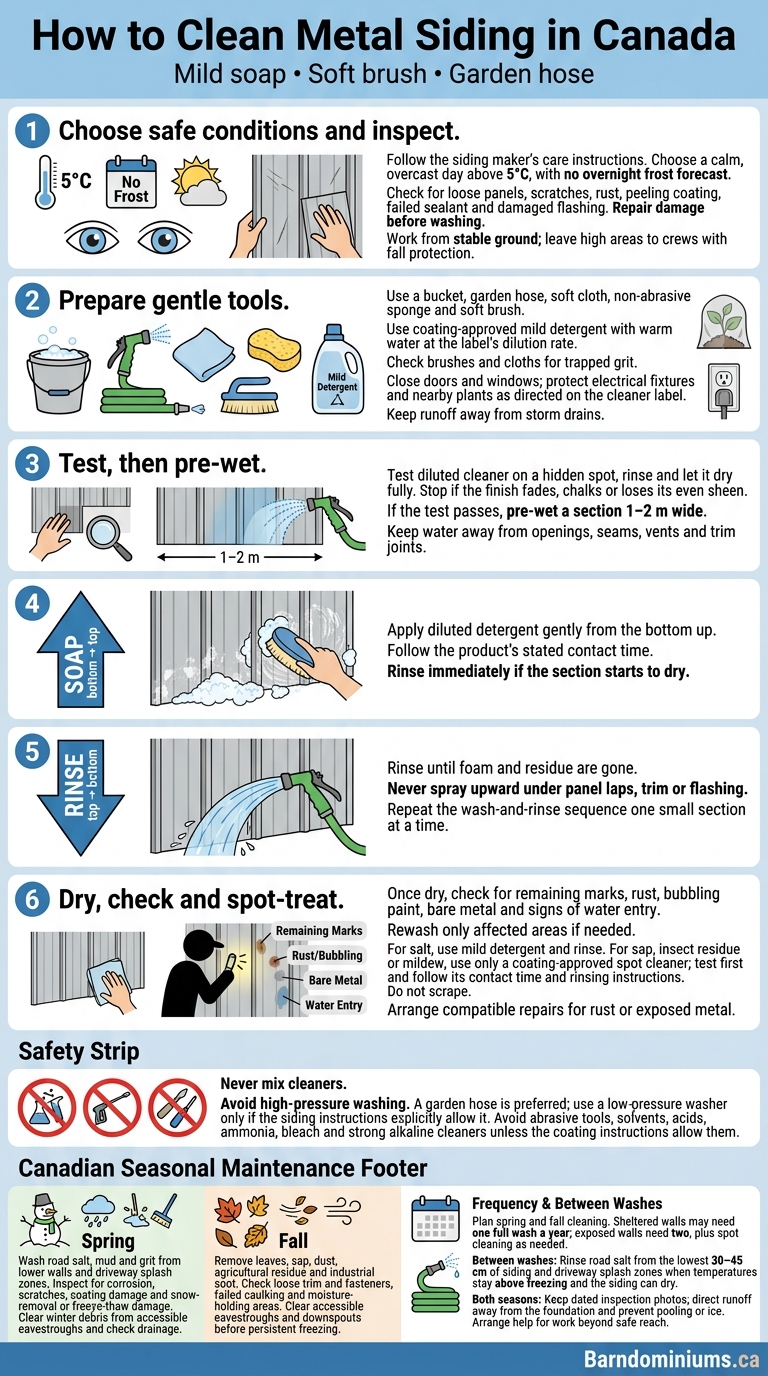
How to Clean Metal Siding in Canada: Safe Washing Steps
House Cleaning & Stain Removal Tips : Cleaning Steel Siding
sbb-itb-d6e8a6a
1. Prepare for Cleaning
Before the first wash, inspect the panels and gather your tools. Choose a calm, overcast day above 5°C, with no frost forecast overnight.
Inspect the Siding and Protect the Work Area
Check for loose panels, scratches, rust, peeling coating, failed sealant and damaged flashing. Repair damage before washing. Remove loose debris and clear gutters and downspouts without disturbing seals.
Close doors and windows. Protect electrical fixtures and nearby plants as directed on the cleaner label, and keep runoff away from storm drains. Work from stable ground with an extension brush. Leave high areas to crews with fall protection.
Choose Mild Soap and Soft Cleaning Tools
Gather a bucket, garden hose, soft cloth and non-abrasive sponge. Mix coating-approved mild detergent with warm water at the rate listed on the label.
Avoid abrasive tools, solvents, acids, ammonia, bleach and strong alkaline cleaners unless the coating instructions allow them. Never mix cleaners. Check brushes and cloths for trapped grit before they touch the finish.
Keep Water Pressure Gentle
Use the lowest pressure that removes dirt, and follow the siding instructions for distance, angle and pressure.
- Garden hose: The preferred choice for routine cleaning.
- Low-pressure washer: Use only if the siding instructions explicitly allow it.
- High-pressure washer: Avoid.
2. Wash the Siding and Treat Stains
With the siding prepped, wash one small section at a time. This helps protect the coating and keeps detergent from drying on the panels.
Test the Cleaner and Pre-Wet the Surface
Test the diluted cleaner on a hidden spot, rinse it, and let it dry fully. Stop if the finish fades, chalks, or loses its even sheen. This check helps protect painted steel and aluminium finishes.
If the test passes, pre-wet the first section – an area about 1–2 m wide. Keep water away from panel openings, seams, vents and trim joints.
Apply Soap from the Bottom Up
Apply diluted detergent with a soft sponge or brush, working from the bottom up to prevent streaks. Use light, even strokes: heavy scrubbing can leave glossy patches on satin finishes.
Follow the product’s stated contact time. If the section starts to dry, rinse it immediately.
Rinse from the Top Down
Rinse from the top down with a garden hose until the foam, residue and runoff are gone. Keep the nozzle clear of openings, and never spray upward under laps, trim or flashing.
Once the surface dries, check for remaining marks, coating damage or signs of water entry. Rewash only the affected area if needed.
Treat Stubborn Marks Without Scraping
For salt, use mild detergent, then rinse it away. For sap, insect residue or mildew, use only a coating-approved spot cleaner. Test it on a hidden spot first, then follow its contact time and rinsing instructions.
Do not scrape or use stronger household chemicals. Have rust or exposed metal repaired with approved products. If stains return, check gutters, roof runoff, nearby vegetation and soil splash.
3. Schedule Spring and Fall Cleaning
Once you’ve spot-treated stubborn marks, set a seasonal cleaning schedule to keep salt, leaves and grit from building up again.
Plan to clean in spring and fall. Sheltered walls may need just one full wash a year, while exposed walls need two, plus spot cleaning as needed. Choose a calm, overcast or lightly sunny day above 0°C. Make sure no freezing temperatures are forecast before the siding dries.
Spring and Fall Cleaning Checklist
Match your cleaning and inspection tasks to Canada’s spring thaw and fall freeze-up.
| Season | Cleaning tasks | Suitable weather | Inspection priorities | Drainage checks |
|---|---|---|---|---|
| Spring | Wash road salt, mud and grit from lower walls and driveway splash zones. | Wait until snow and ice have cleared, then allow the siding to dry completely above freezing. | Look for corrosion, scratches, coating damage and damage from snow removal or freeze-thaw cycles. | Clear winter debris from eavestroughs. Check for blocked outlets, disconnected downspouts and damaged extensions. |
| Fall | Remove leaves, sap, dust, agricultural residue and industrial soot. | Clean after most leaves have fallen but before persistent freezing. | Check for loose trim and fasteners, failed caulking and areas that hold moisture. | Clear accessible eavestroughs and downspouts. Keep outlets open and extensions connected. |
| Both seasons | Photograph corrosion, scratches and loose trim. Record their location and size. | Follow the weather guidance above. | Have exposed metal, active corrosion or water entry assessed. | Watch runoff during and after washing. Direct it away from the foundation and prevent pooling or ice. |
Work only where access is safe. Arrange help for eavestrough or ladder work beyond your reach.
Keep dated photos after each seasonal inspection. Comparing them helps you spot spreading corrosion, recurring damp areas or new winter damage before the next cleaning.
Conclusion: Clean Gently and Check Seasonally
For every spring and fall wash, protect the coating with mild soap, a soft brush or cloth, and a low-pressure hose rinse.
During Canadian winters, remove road salt sooner than dust or pollen. Between seasonal washes, rinse salt from the lowest 30–45 cm of siding and driveway splash zones as soon as temperatures stay above freezing and the surface can dry.
Once the siding dries, check for rust, bubbling paint or bare metal. Arrange a compatible repair before corrosion spreads.
FAQs
How can I tell chalking from dirt on metal siding?
Rub your fingers over the siding. Chalking happens when the paint film oxidizes, leaving a white, powdery residue on your fingers. Dirt, on the other hand, is loose debris – such as dust, pollen or mud – that washes away with water and a soft brush.
If a powdery film remains after cleaning, it’s likely chalking. This means the coating is ageing and starting to break down.
What should I do if mildew keeps returning?
Mildew that keeps coming back usually points to a moisture problem. Use a high-quality 100% acrylic latex coating with built-in mildew resistance, especially in damp regions such as British Columbia or the Maritimes.
Check and re-caulk seams, windows, and doors to keep water out. Clear nearby debris, trim overhanging branches, and make sure water drains away from the foundation. These steps help keep siding dry and discourage mildew from returning.
Does coastal salt require more frequent siding cleaning?
Yes. Coastal salt air speeds up corrosion, so metal siding needs more frequent inspections and care. Clean it regularly, and check metal surfaces and flashings for rust once a year.
For buildings within 5 km of saltwater, choose materials suited to coastal conditions, such as Galvalume or specialized C5-Marine rated coatings, to help resist corrosion.
Related Blog Posts
- Research: Metal Roof Lifespan for Barndominiums in Canada
- How to Install Stone Veneer on Barndominiums
- FAQs About Weather-Resistant Coatings for Barndominiums
- How to Prevent Rust on Canadian Barndominiums
{“@context”:”https://schema.org”,”@type”:”FAQPage”,”mainEntity”:[{“@type”:”Question”,”name”:”How can I tell chalking from dirt on metal siding?”,”acceptedAnswer”:{“@type”:”Answer”,”text”:”Rub your fingers over the siding. Chalking happens when the paint film oxidizes, leaving a white, powdery residue on your fingers. Dirt, on the other hand, is loose debris – such as dust, pollen or mud – that washes away with water and a soft brush. If a powdery film remains after cleaning, it’s likely chalking. This means the coating is ageing and starting to break down.”}},{“@type”:”Question”,”name”:”What should I do if mildew keeps returning?”,”acceptedAnswer”:{“@type”:”Answer”,”text”:”Mildew that keeps coming back usually points to a moisture problem. Use a high-quality 100% acrylic latex coating with built-in mildew resistance, especially in damp regions such as British Columbia or the Maritimes. Check and re-caulk seams, windows, and doors to keep water out. Clear nearby debris, trim overhanging branches, and make sure water drains away from the foundation. These steps help keep siding dry and discourage mildew from returning.”}},{“@type”:”Question”,”name”:”Does coastal salt require more frequent siding cleaning?”,”acceptedAnswer”:{“@type”:”Answer”,”text”:”Yes. Coastal salt air speeds up corrosion, so metal siding needs more frequent inspections and care. Clean it regularly, and check metal surfaces and flashings for rust once a year. For buildings within 5 km of saltwater, choose materials suited to coastal conditions, such as Galvalume or specialized C5-Marine rated coatings, to help resist corrosion.”}}]}