
Do Energy-Efficient Windows Work in Cold Climates?

Yes, energy-efficient windows are highly effective in cold climates, including Canada’s harsh winters. They reduce heat loss, improve indoor comfort, and lower heating costs. Here’s how they perform and why they’re worth considering:
- How They Work: Energy-efficient windows use technologies like double or triple panes, Low-E coatings, insulating gas fills (argon or krypton), and insulated frames to minimize heat transfer.
- Performance in Cold Weather: Triple-pane windows keep interior glass temperatures up to 17–18°C during extreme cold (e.g., –35°C), compared to only 8–10°C for standard double-pane options.
- Energy Savings: They can cut heating costs by 15–30% annually, with payback periods ranging from 7 to 15 years depending on location and climate zone.
- Ideal for Barndominiums: These windows are especially important for buildings with large glass areas, like barndominiums, to prevent cold zones, condensation, and high heating bills.
- Costs: Upgrading to triple-pane windows adds $150–$300 per window, with installation costs ranging from $800–$1,500 per unit in Canada.
For colder areas like Alberta or Saskatchewan, triple-pane windows are a smart long-term investment. Proper installation is key to maximizing their benefits.
How Energy-Efficient Windows Perform in Cold Weather
Heat Loss Mechanisms and How Windows Address Them
Windows lose heat through three main pathways: conduction, radiant transfer, and air leakage. These processes can significantly increase heating costs during the winter. Energy-efficient windows combat these losses with smart design and materials.
Conduction – the direct transfer of heat through materials – is minimized by using multiple panes of glass separated by insulating gas chambers. This feature is especially important in cold climates where the temperature difference between indoors and outdoors can be extreme. Radiant transfer, which involves infrared energy passing through the glass, is addressed with Low‑E coatings. These coatings help keep interior surfaces warm by reflecting heat back inside, preventing it from escaping. Air leakage is reduced with compression seals and multi‑point locks, particularly in casement and tilt-and-turn window designs.
Another key innovation is the use of warm‑edge spacer bars, which can cut heat loss around the edges of windows by up to 70%. Together, these features ensure better insulation and energy savings, even in harsh Canadian winters.
Key Performance Metrics for Canadian Winters
To assess how well windows perform in cold weather, three critical metrics come into play: the U‑factor, the Solar Heat Gain Coefficient (SHGC), and the Energy Rating (ER).
- U‑factor: This measures the rate at which heat escapes through a window. A lower U‑factor means better insulation. For instance, triple‑pane windows usually have a U‑factor between 0.7 and 0.9 W/m²K, while standard double‑pane windows range from 1.6 to 2.0 W/m²K.
- SHGC: This indicates how much solar energy enters through the window. In cold climates, a higher SHGC on south-facing windows can help capture passive solar heat during short winter days.
- ER: Unique to Canada, this metric combines the U‑factor, SHGC, and air leakage into a single score to evaluate a window’s overall performance during the heating season.
Here’s how different window configurations compare:
| Configuration | U‑Value (W/m²K) | Interior Glass Temp at –10°C Outside |
|---|---|---|
| Single Pane | 5.8 | –2°C |
| Double Pane (Clear) | 2.8 | 10°C |
| Double Low‑E Argon | 1.1–1.4 | 14°C |
| Triple Low‑E Argon | 0.7–0.9 | 17°C |
| Triple Low‑E Krypton | 0.5–0.7 | 18°C |
(Source: Energy Solutions Technical Report, 2026)
Features That Improve Winter Performance
Triple-glazed windows, which include three panes separated by two gas chambers, reduce heat loss by about 30% compared to double-pane windows. This is especially beneficial for homes with large window walls, such as barndominiums.
The type of insulating gas used between panes also plays a crucial role. Argon gas is 34% less conductive than air, while krypton gas is 64% less conductive, making both excellent choices for improving insulation. High-quality windows are designed to retain over 90% of their gas fill for 15 to 20 years, ensuring long-term performance.
When it comes to frames, fibreglass and thermally broken aluminium are ideal for larger openings. Fibreglass expands and contracts at nearly the same rate as glass, reducing the likelihood of seal failure during extreme temperature changes. These advanced features are particularly important for homes with expansive glass areas, where maintaining thermal efficiency is critical.
sbb-itb-d6e8a6a
Benefits and Limitations for Cold-Climate Barndominiums
Benefits for Barndominium Living
Barndominiums typically have open layouts and large wall areas, which can lead to significant heat loss. One way to tackle this issue is by using energy-efficient windows.
Triple-pane windows, for instance, keep interior glass surfaces much warmer than double-pane options. This eliminates cold drafts and makes living spaces noticeably more comfortable. They also prevent frost buildup by keeping glass temperatures above the dew point, which protects against wet window sills, mould, and structural damage. This is especially crucial in barndominiums that serve as both homes and workshops, where humidity levels can vary.
"In bathrooms and kitchens, triple pane is often justified on condensation resistance alone." – Energy Solutions Technical Report
Another advantage for rural barndominiums is soundproofing. Triple-pane windows, with STC ratings of 32–36, significantly reduce outdoor noise compared to the 25–27 ratings of standard double-pane options.
While these benefits are compelling, it’s important to weigh them against some practical considerations.
Realistic Limitations
Despite their advantages, triple-pane windows come with certain drawbacks. They are heavier – about 50% more than double-pane units – and 30% thicker. Additionally, they are more expensive, costing an extra $150 to $300 per window. For a barndominium with 12 to 15 windows, this could mean an additional $1,800 to $4,500, not including installation costs.
In milder areas of Canada, such as coastal British Columbia, the energy savings from triple-pane windows may take longer to offset the upfront cost. In colder regions like Edmonton or Saskatoon (Zones 6 and above), the payback period typically ranges from 7 to 15 years. However, in moderate climates, this period can stretch even further.
The choice of window frame material is another key factor. Low-quality vinyl frames may crack or warp in extreme temperatures, while untreated wood frames are susceptible to rot in humid conditions. Selecting durable materials upfront can prevent expensive repairs down the road.
Standard vs. Energy-Efficient Windows: Comparison Table
| Feature | Standard Double-Pane | High-Performance Double-Pane | Triple-Pane |
|---|---|---|---|
| U-Factor (W/m²K) | 1.6–2.0 | 0.29–0.32 | 0.19–0.22 |
| Condensation Risk | High in deep freeze | Moderate | Very low |
| Approx. Cost (CAD, installed) | $400–$800 | $600–$1,200 | $800–$1,500 |
| Best For | Mild regions (e.g., BC coast) | Central Canada | Northern/extreme cold zones |
(Sources:)
For cold-climate barndominiums in areas like Alberta, Saskatchewan, Manitoba, or Northern Ontario, the performance difference between standard and triple-pane windows makes the higher cost worthwhile. However, in milder regions, high-performance double-pane windows may strike a better balance between cost and efficiency.
Heat Loss Test: How Triple Pane Windows & Energy-Efficient Doors Really Perform
Cost, Savings, and Payback in Canada
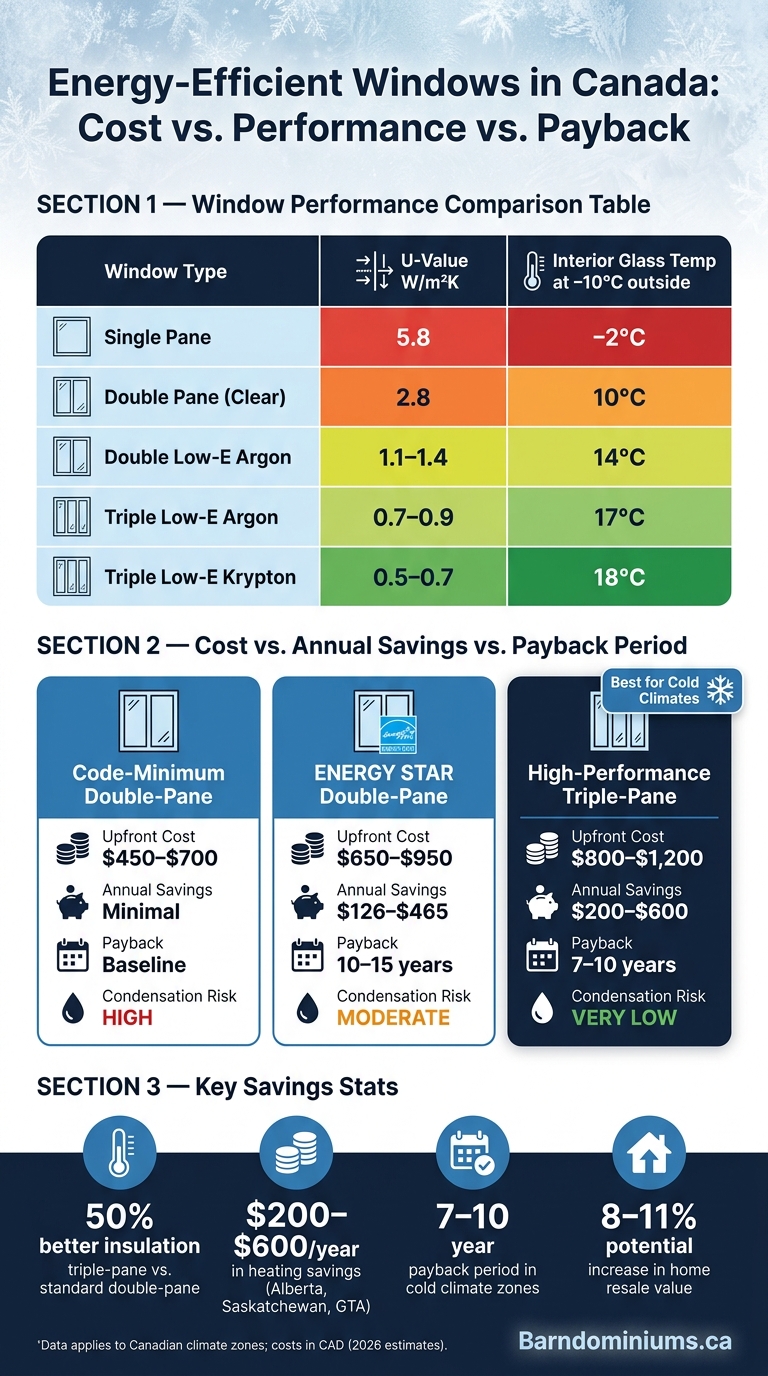
Energy-Efficient Windows in Cold Climates: Cost, Performance & Payback
Upfront Costs and What Affects Them
In Canada (2026), the cost of installing windows depends on several factors, including the type of frame, the glass used, and the location of the installation. Here’s a breakdown of typical price ranges:
- Basic vinyl double-pane: $450–$700
- Premium vinyl double-pane: $650–$950
- Triple-pane vinyl: $800–$1,200
- Fibreglass: $900–$1,400
- Wood interior/clad exterior: $1,200–$2,000+
Switching from double-pane to triple-pane windows typically adds $150 to $300 per window. For example, upgrading 14 windows in a barndominium could cost an additional $2,100 to $4,200. On top of that, extra expenses like frame repairs, interior trim, or exterior capping can push costs higher.
Location also plays a role. In the Greater Toronto Area, window installation prices can be 10–20% higher compared to smaller cities in Ontario.
Energy Savings and Payback Periods
While the upfront costs may seem steep, they need to be balanced against long-term savings and payback times. In colder provinces like Alberta, Saskatchewan, and Manitoba, upgrading to triple-pane windows can save homeowners $200 to $500 annually on heating costs alone. In the GTA, where both heating and cooling are factors, savings range from $200 to $600 per year.
The payback period varies depending on your location and climate zone. In colder areas (Zone 6 and below), provincial rebates can significantly shorten the time it takes to recoup your investment. For instance, Ontario’s Home Renovation Savings Program (available until November 2026) offers $100 per qualifying window, provided at least two energy-efficient upgrades are completed. To qualify, a pre-renovation energy assessment is mandatory before replacing any old windows. In milder climates, however, payback periods can extend to 25 years or more.
"Triple-pane is worth it in Edmonton. Not because of a marketing claim on a brochure, but because of math." – Value Windows & Doors
Beyond energy savings, rebates like Ontario’s program can help offset costs, and high-performance windows may also increase a home’s resale value by 8–11%. For barndominiums, where large windows amplify both energy losses and savings, these considerations become even more important.
Cost vs. Benefits: Comparison Table
| Window Type | Upfront Cost (CAD, installed) | Annual Heating Savings | Payback Period | Comfort & Condensation |
|---|---|---|---|---|
| Code-minimum double-pane | $450–$700 | Minimal | N/A (baseline) | High condensation risk in deep freeze |
| ENERGY STAR Northern-rated double-pane | $650–$950 | $126–$465 | 10–15 years | Moderate condensation risk |
| High-performance triple-pane | $800–$1,200 | $200–$600 | 7–10 years (on premium) | Very low condensation risk |
(Sources:)
For barndominiums, where window-to-wall ratios are typically higher, the benefits of triple-pane windows become even more pronounced. Large glass surfaces significantly impact the building’s thermal performance, making the efficiency gains from each window installation more impactful. This makes high-performance windows a critical investment for such structures.
Choosing and Installing Windows for Cold-Climate Barndominiums
Matching Windows to Canadian Climate Zones
In Canada, your location plays a big role in choosing the right windows. If you’re in the chilly Prairie provinces – Alberta, Saskatchewan, and Manitoba – triple-pane windows are your best bet. They can cut heat loss by an extra 30–40% compared to double-pane windows. In milder areas like coastal British Columbia or Southern Ontario, double-pane windows with Low-E coatings might be enough, although triple-pane options still provide better comfort and reduce noise (35–40 dB compared to 25–30 dB for double-pane).
Orientation matters too. South-facing windows can bring in passive solar heat during winter, but Low-E coatings ensure you don’t overheat in the summer. If your barndominium is in a windy, rural area, casement or tilt-and-turn windows are better than sliding styles because they seal more tightly.
Now, let’s dive into how frame materials can improve winter performance.
Frame Material Options
The material of your window frames significantly affects their ability to handle Canadian winters. Here are the key options:
| Frame Material | Cold-Weather Performance | Lifespan | Best Suited For |
|---|---|---|---|
| Fibreglass | Excellent; stable at −40°C | 30–50 years | Prairies; extreme temperature swings |
| Vinyl (multi-chambered) | Good; may become brittle below −30°C | 20–40 years | Budget-conscious builds; coastal areas |
| Thermally broken aluminium | Moderate to good | High | Modern barndominium designs |
| Wood-clad | Excellent natural insulation | 100+ years (with maintenance) | Heritage aesthetics; urban builds |
Fibreglass is particularly well-suited for Canadian winters. It matches the expansion rates of glass, which helps maintain the seal during freeze-thaw cycles.
"Fibreglass maintains structural integrity and seal performance even at −40°C temperatures common in northern Alberta and Ontario." – Canada Construction Network
While fibreglass costs more upfront, it often proves to be a better long-term investment due to its durability and energy efficiency.
If you’re drawn to the sleek look of aluminium frames for modern barndominiums, make sure they have a thermal break. Without this insulating layer, aluminium can transfer cold into your walls, causing condensation and heat loss.
Why Proper Installation Matters
Even the best windows won’t perform well if they’re installed poorly. Improper installation can lead to significant heat loss – up to 25–30% of your home’s total. Full-frame installation is the preferred method, as it involves removing the old window entirely. This allows for inspection of the rough opening to address issues like rot, moisture damage, or gaps in insulation that might be hidden in a retrofit.
Using low-expansion spray foam around the window’s perimeter helps eliminate thermal bridges between the frame and wall structure. Keep in mind that sealants and foam need temperatures above −20°C to cure properly. Also, it’s crucial to integrate the windows with your building’s vapour and air barriers. Skipping this step can lead to drafts, condensation, and even structural rot down the line.
"Even the best window won’t perform well if installed poorly." – The Window Centre
"Airtightness matters more than brand names." – Daniel T, British Building Supplies
For barndominiums, where the structure is often a steel shell, proper installation is even more critical. From choosing the right windows for your climate to selecting durable frame materials, every decision impacts the final result. When done right, these steps ensure your barndominium stays energy-efficient and comfortable for years to come.
Conclusion: Getting the Most from Energy-Efficient Windows
Energy-efficient windows can handle the demands of cold Canadian winters when chosen and installed correctly. Triple-pane windows are the top choice for extreme weather, providing up to 50% better insulation compared to standard double-pane options. Combine them with the right coatings, gas fills, and durable frame materials to maximize their performance.
Windows certified by ENERGY STAR offer about 20% better efficiency, with the "Most Efficient" models reaching up to 55%. This can lead to noticeable heating savings, especially for barndominiums with 10–15 windows. To ensure the best results, always hire certified installers. The combination of the right product and professional installation is critical to achieving the desired efficiency.
As Steve Konstantino from Green & Healthy Maine HOMES advises:
"Try to look past the marketing materials and get to the actual performance data. You get one shot to get it right. Choose wisely!"
Ultimately, selecting the right windows and ensuring proper installation are essential for long-term energy savings and comfort. For tailored guidance on your barndominium project, check out Barndominiums Canada for expert advice and free pricing options that suit your climate.
FAQs
How do I know if I need triple-pane or high-performance double-pane windows?
In Canada’s chilly winters, deciding between triple-pane and high-performance double-pane windows comes down to your energy priorities and budget.
Triple-pane windows provide superior insulation, making them a great choice for harsh winters. They can help cut energy costs but typically come with a price tag that’s 10–15% higher. On the other hand, high-performance double-pane windows may be a more practical option for milder regions or if you’re planning a shorter stay in your home.
For those in extremely cold areas like Ontario or Alberta, triple-pane windows are worth considering for the long-term energy savings they offer.
Which window frame material holds up best in extreme Canadian cold?
Fibreglass window frames stand out for their durability, energy efficiency, and resistance to warping or cracking. These features make them a solid option for handling the harsh cold often experienced in Canadian winters.
What should I ask my installer to prevent drafts and condensation?
To keep drafts and condensation at bay, make sure your installer properly seals and installs your windows. Insist on airtight sealing to cut down on air leaks and ensure the frames are securely and correctly fitted to prevent cold spots and moisture issues. Opt for windows with strong thermal insulation, such as triple-pane models, and confirm that weatherproofing and sealing are done using industry best practices during the installation process.